

Extinction Story
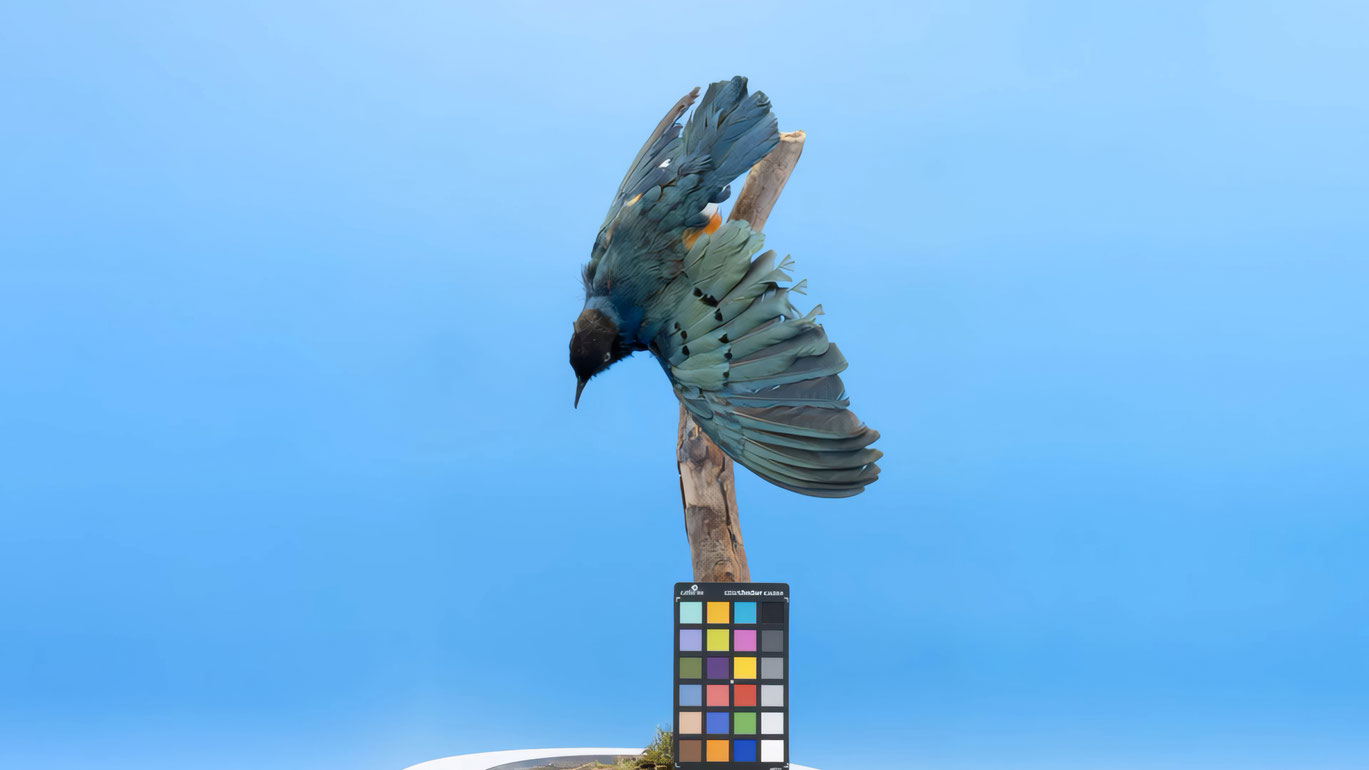
There’s no better symbol for the beauty of the end of the world than birds. Once upon a time, they ruled the earth as grandiose dinosaurs, and then suddenly, poof!, it was all over. Diplodocus and T-Rex became storks and sparrows, and their roars turned into chirps.
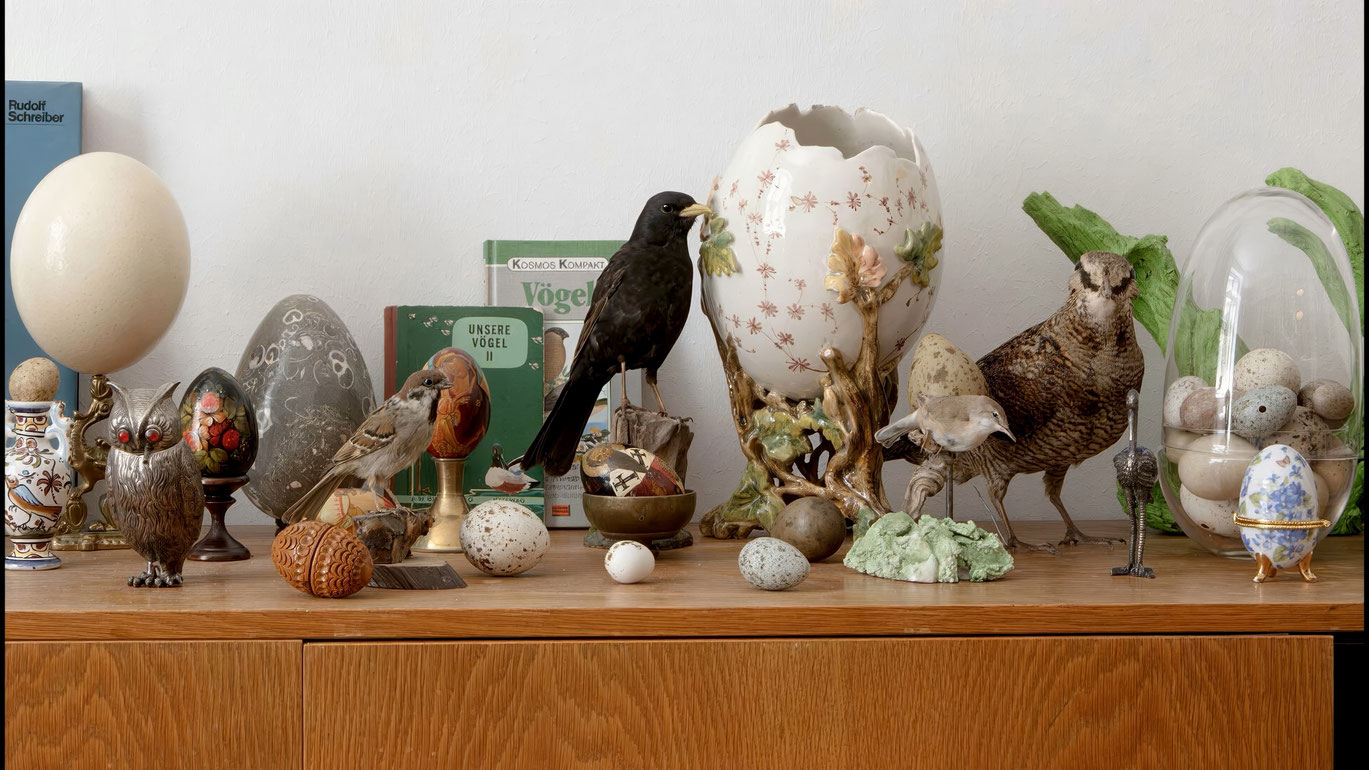
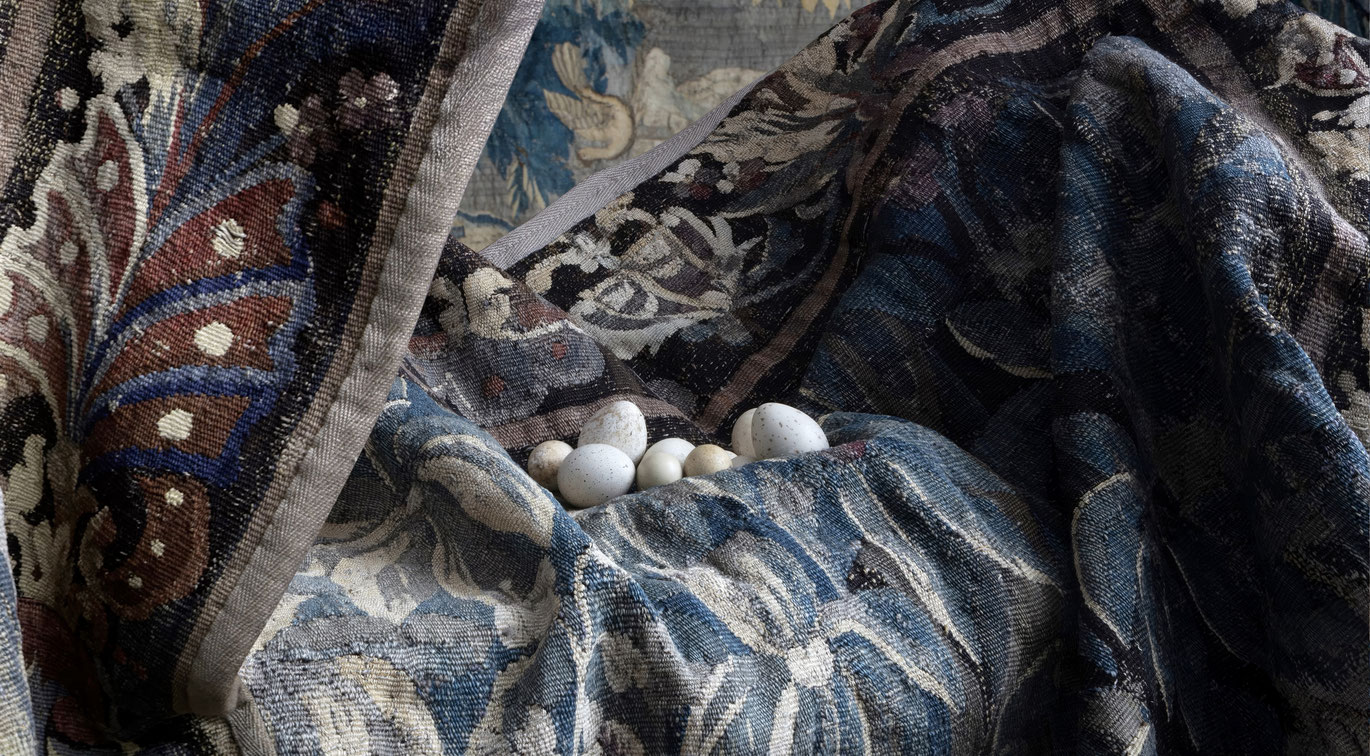
The theme of Claudia Larcher’s essay film Extinction Story is that of dying out. Even though there are no dinosaurs, Larcher’s thoughts are a meditation on the passing away of biological orders, inspired by a collection of eggs that she inherited. They tell the story of Joseph, a soldier who loses his son and finds meaning in birds. And of his desire to shrink the world in order to bring order to it.
“Perhaps collecting is an attempt not to leave fate to history,” Larcher reflects in the voiceover commentary accompanying black-and-white photographs of her grandfather, who poses with a camera strapped to his neck amidst a colony of puffins. “Those who have witnessed systems collapse go on to build their own,” she posits.
Soon, the focus shifts away from Josef. The camera jumps between near and far, between macrocosm and microcosm. Eggshells become fragile maps, and birds step in front of the lens. Why is every attempt to understand their chirping doomed to failure? And is that sound a lapwing or a chainsaw?
Larcher poses all these questions in a tone that is relaxed and removed from time. This feels almost modern in a present where we are constantly surrounded by digital distortion and AI slop. Profoundly human, it’s about human mortality, about the dream of order – and how it keeps slipping through our fingers. Accompanying this film meditation are the bubbling and shimmering sounds of Ursula Winterauer, also known as Gischt. In this way we learn that disappearance can be beautiful. And elegant. Larcher treats the end like a precious collection of eggshells, approaching it with velvet gloves. (Paul Buschnegg)
Extinction Story
2026
Austria
17 min