

Frankenstein Fragment
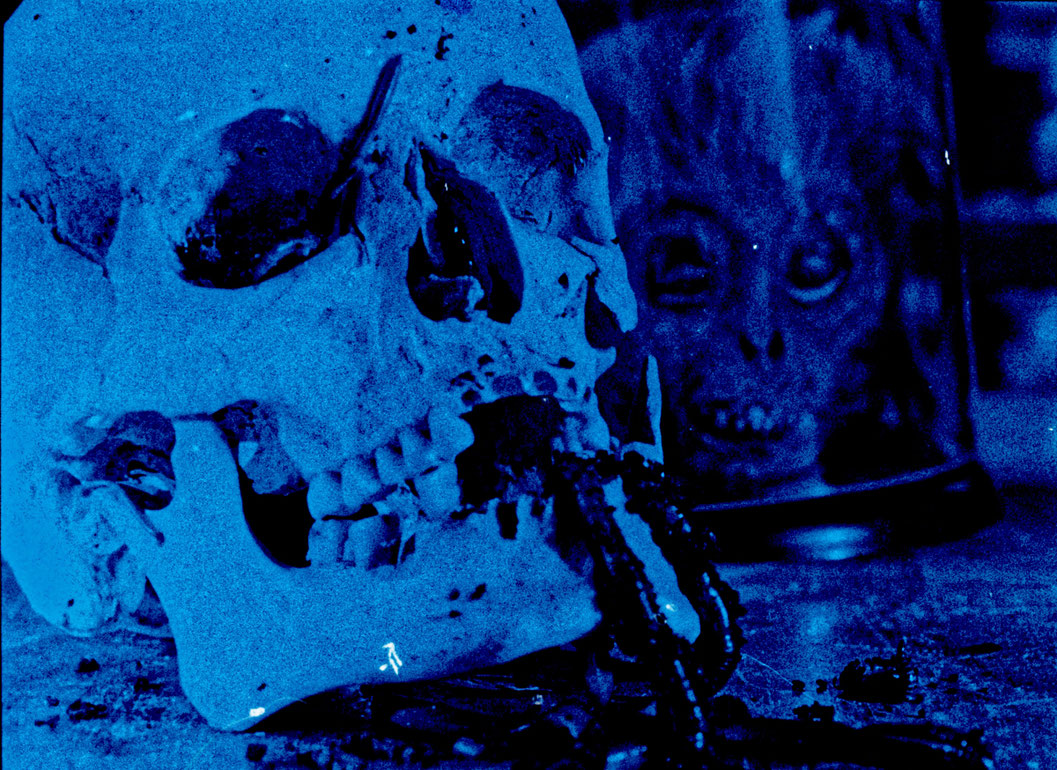
German silent cinema featured Der Golem (1914; Paul Wegener & Henrik Galeen) and Der Homunculus (1916–17; Otto Rippert), but never the creatures that Mary Shelley conceived for her novel Frankenstein; or, The Modern Prometheus (1818). Strange, really, given that there was a barely veiled Dracula in Friedrich Wilhelm Murnau’s Nosferatu – A Symphony of Horror (1922), and that the two horror stories were subsequently almost always adapted in tandem.
Norbert Pfaffenbichler’s Frankenstein Fragment offers a dreamlike response to this question in the form of the torso of a work that could have been but never was – a feast of expressive imagery, partly expressionist, partly surrealist, full of handmade special effects, including the chemical ravages of the 35mm film stock. Pfaffenbichler added a dimension all of his own to the whole by claiming that the (fictional) fragment on which the film is based also includes test footage and unused shots, which is why there are two Victors and three Elisabeths here – which adds a motif to the work that was pivotal to late Wilhelmine cinema as well as the cinema of the Weimar Republic: the doppelgänger. Frankenstein Fragment is not only a brutally incisive literary adaptation, but also a clever distillation of an era as witnessed through cinema, in the spirit of our times.(Olaf Möller)
Frankenstein Fragment
2026
Austria
28 min