

Hans Scheugl Retrospective – The Places of Time
The Places of Time
Hans Scheugl, born in 1940, is a pioneer of the strong experimental cinema in Austria, which was effectively merged through the formation of the Austrian Filmmakers Cooperative, an association formed in 1968. He is one of the key chroniclers of his time. Without his books Erweitertes Kino. Die Wiener Filme der 60er Jahre (2002) and the out-of-print standard work Eine Subgeschichte des Films. Lexikon des Avantgarde-, Experimental- und Undergroundfilms (1974, together with Ernst Schmidt Jr.), an important part of film history would simply not exist. (Dietmar Schwärzler)
"In September 1969, a public insult takes place on television: in the ORF series APROPOS FILM, a young artist presents himself as an anti-bourgeois force. From the literal underground, from a deep construction pit beneath Vienna City Hall, he begins to throw rubble and stones at the camera while he speaks. He is driven by anger, dismay at provincial, anti-artistic Austria and its 'fascist-reactionary cultural functionaries'. The furore benefits the avant-garde." (Stefan Grissemann, 2015)
My first film is called MILIZ IN DER FRÜH (Militia in the Morning). Twenty years after the end of the war, the militia that searched for and rounded up people did not wear uniforms, but hid themselves behind conventionality and lived almost unrecognised within society. This ambivalence is reflected in my film: perpetrators play victims, which makes it difficult to know who is who. Today, militias wear uniforms (or combat boots) again and have names like ICE, and they don't show up at your door only in the morning, which makes the matter clear. My film has never been so distinctly recognisable. (Hans Scheugl, 2026)
A cooperation between Filmarchiv Austria and sixpackfilm
---------------------------------
26.03.2026 - 20:00 | 28.03.2026 - 20:00 | 29.03.2026 - 20:00 |
03.04.2026 - 18:00 | 07.04.2026 - 18:00
What the Night speaks – a Story (Orig.: Was die Nacht spricht – eine Erzählung)
Hans Scheugl, 1986/2025, 60 min
"Two women speaking to each other in an artificial language, workers in a pub speaking in dialect, patients in a psychiatric hospital improvising to express their self – all these divergent representations communicate not by interacting with each other, but by touching each other. All the storylines converge in the night, whereby night is less a matter of the time of day than of a state of mind. Just as night isolates everything and accentuates it in its isolation, it also covers everything equally, connecting it. The night reveals what it conceals.” (Hans Scheugl, 1985)
Thursday, March 26: in the presence of Hans Scheugl
-----------------------------------
27/03/2026 - 18:00
Short Films
Miliz in der Früh || Hans Scheugl || AT 1966, 17 min
Wien 17, Schumanngasse || Hans Scheugl || AT 1967, 3 min (silent)
Hernals || Hans Scheugl || AT 1967, 11 min
Safety Film || Hans Scheugl || AT 1968, 6 min
zzz: hamburg special || Hans Scheugl || AT 1968, Expanded Cinema, ca. 3 min
Eroticon sublim || Hans Scheugl || AT 1968, 3 min (silent)
Sugar Daddies || Hans Scheugl || AT 1968, 13 min (silent)
The creation of man || Hans Scheugl || AT 1969, 3 min (silent)
Apropos Film, Folge 4/1969 [Ausschnitt], 3 min
The 1960s were an era of change, which in 1968 manifested itself in all its radicalism in experimental film, especially in Scheugl's film actions, central examples of expanded cinema. ZZZ: HAMBURG SPECIAL (1968) is one of the most radical and minimalist works of this genre: a ready-made, a purchased spool of thread that the buyer runs through the film projector so that it is set in motion on the screen. Conceptually just as clever is the journey through SCHUMANNGASSE from start to finish, which cannot last longer than the 16 mm roll in the camera allows. (ds)
"Scheugl is concerned with examining the complex relationship between real time and film time. While in WIEN 17, SCHUMANNGASSE he seemingly artlessly records the uncut forward movement, the highly musical montage film HERNALS presents cinema as a synthetic, quasi-cubist art form in which time and space are doubled, stretched and chopped up." (Stefan Grissemann, 2015)
From the outset, elements of genre cinema and references to film history have permeated Scheugl's film work: in MILIZ IN DER FRÜH, the Nouvelle Vague; in HERNALS, gangster films; in SAFETY FILM, westerns; in THE CREATION OF MAN, the drama of Jekyll and Hyde; and SUGAR DADDIES is dedicated to Laurel and Hardy. Most recently, a coup on ORF: Scheugl's manifesto against Austria's hostility towards art. (ds)
in the presence of Hans Scheugl
--------------------------------
30.03.2026 - 20:30 | 02.04.2026 - 20:00
The Place of Time || No Danube - Kurt Kren and his films
The Place of Time || Hans Scheugl || AT 1985, 39 min
No Danube - Kurt Kren and His Films || Hans Scheugl || AT 1988, 55 min
"Based on a metaphor from James Joyce's Finnegans Wake – a dead man comes back to life – Scheugl's film moves from the morgue into the open air, past forests and house walls, past people and telephone booths, under motorway bridges – on a winding track, but without any jumps. One image (a static shot) follows another, each section containing elements of the previous one: Scheugl has called this approach a 'topography of time'. The film condenses the real-time frame of 24 hours into 40 minutes." (Alexander Horwath, 1985)
KEINE DONAU is a friendly portrait of Kurt Krens, pioneer of Austrian avant-garde film. Scheugl visited him in the USA, where he earned his living as a museum attendant in Houston. (ds)
Monday, March 30: in the presence of Hans Scheugl
-------------------------------
31.03.2026 - 20:30 | 07.04.2026 - 20:00
Rutt Deen || (Calcutta) GO
Rutt Deen || AT 1993 || 60 min
(Calcutta) GO || Hans Scheugl || AT 1993, 9 min
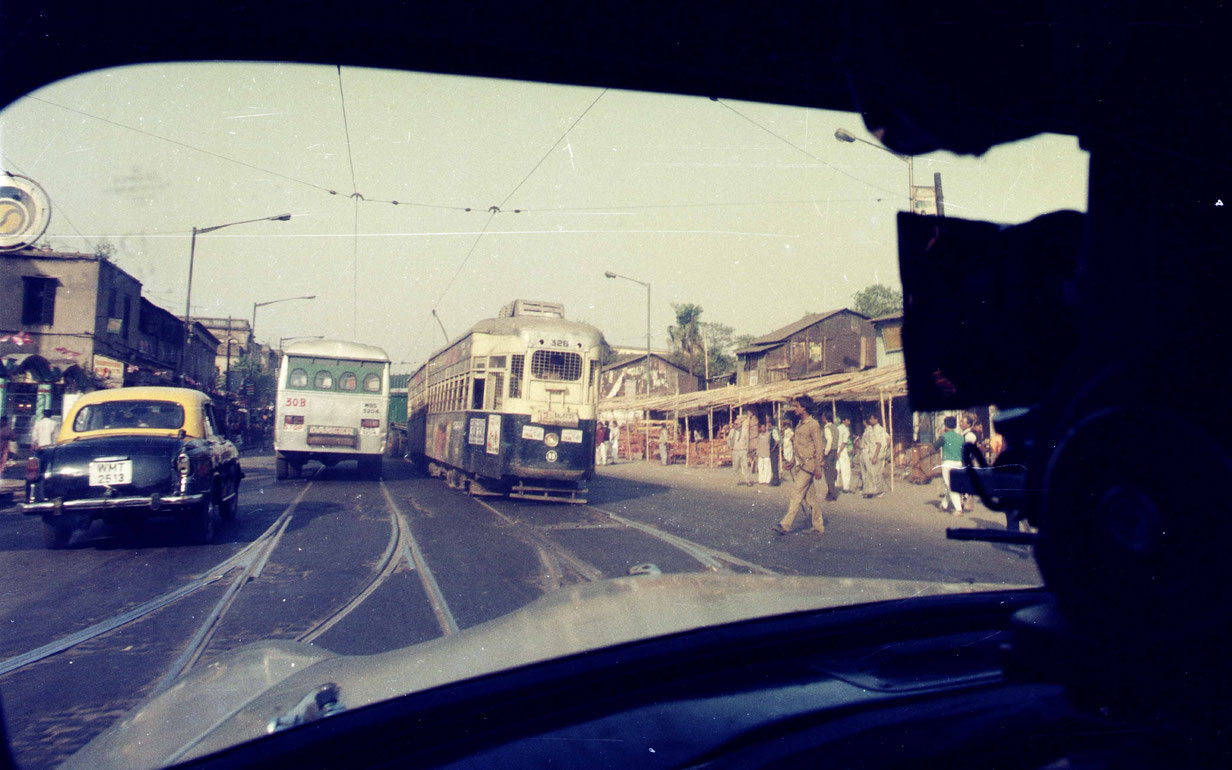
Two hotels, one called Bellevue, the other Rutt Deen, one in Vienna, the other in Calcutta (now Kolkata). Rutt Deen is the English spelling of the Hindi words Rat Din, which mean night day. 'The leap between the continents is as vast as that between dream and wakefulness, between night and day, and yet one of the constantly recurring images of memory is a reality. India: that is hyperreality, measured against the comfort of the world we know. The figure of the photographer serves Scheugl as an interface where the two worlds – Vienna and Calcutta – break apart, making him a stranger in both." (Peter Tscherkassky, 1993).
The title (CLACUTTA) GO reveals the pull of movement. (ds)
Thursday March 31: in the presence of Hans Scheugl
---------------------------------------
01.04.2026 - 20:30 | 06.04 2026 - 20:00
Dear John || Prince of Peace || Homeless New York 1990
Dear John || Hans Scheugl || AT 2015, 42 min
Prince of Peace || Hans Scheugl || AT 1993, 8 min
Homeless New York 1990 || Hans Scheugl || AT 1990/2013, 18 min
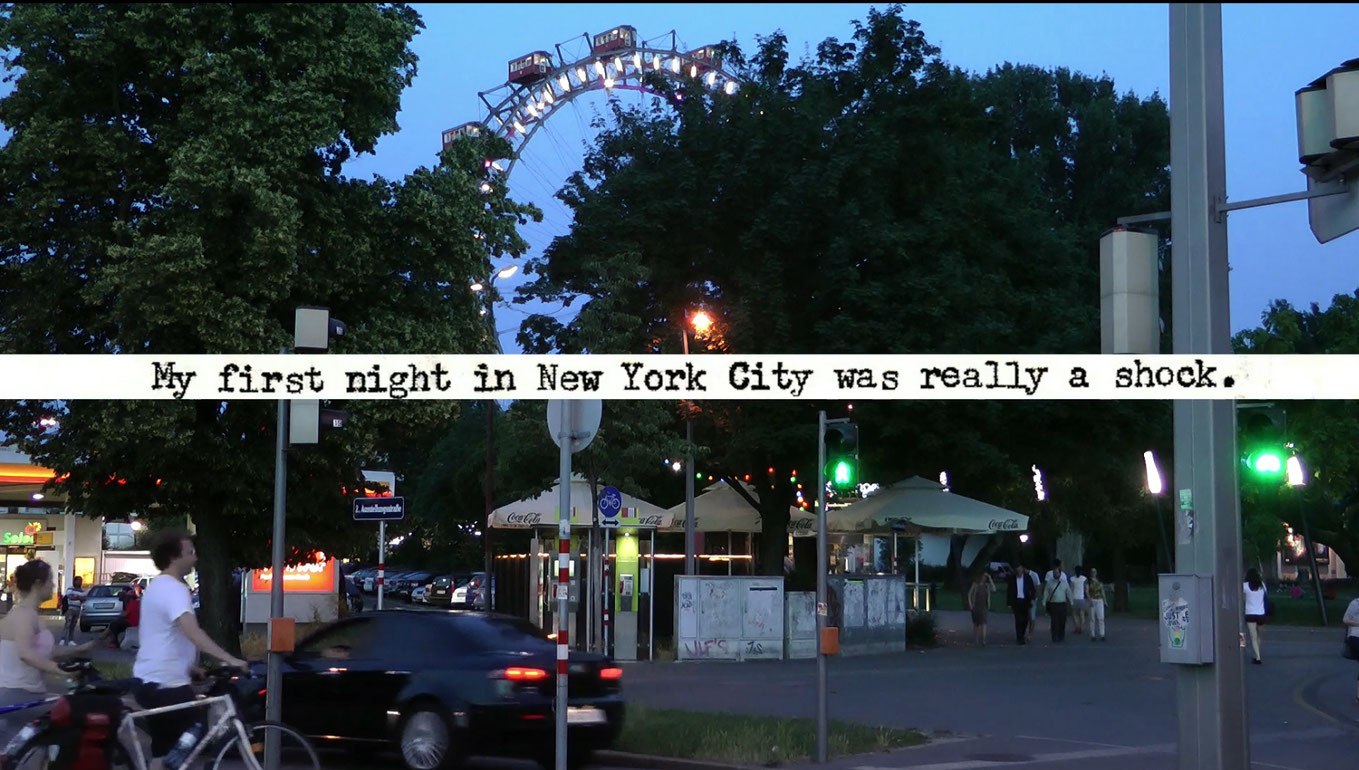
In DEAR JOHN, Scheugl looks back on his time as a young man in the mid-1960s. Back then, he met an American in Greece who later visited him in Vienna and wrote him longing letters from the USA until the Army recruited him for Vietnam.
‘The entire film is structured as a dialogue across continents and decades, with individual sentences or paragraphs from John's typewritten letters superimposed on the images, alternating with Hans' reflections on their friendship, his non-lucrative art, and the state of the world, spoken from the distance of today.’ (Michael Omasta, 2015)
HOMELESS NEW YORK 1990 focuses on rampant poverty, which became visible as a result of President Reagan's unleashed neoliberalism in the 1980s. PRINCE OF PEACE is a formally rigorous miniature of gay desire.
Wednesday April 1: in the presence of Hans Scheugl || moderators: Dietmar Schwärzler, Geri Weber
Metro Kinokulturhaus
Johannesgasse 4, 1010 Vienna
Tickets:
reservierung@filmarchiv.at or 01-512 18 03 or online:
www.filmarchiv.at
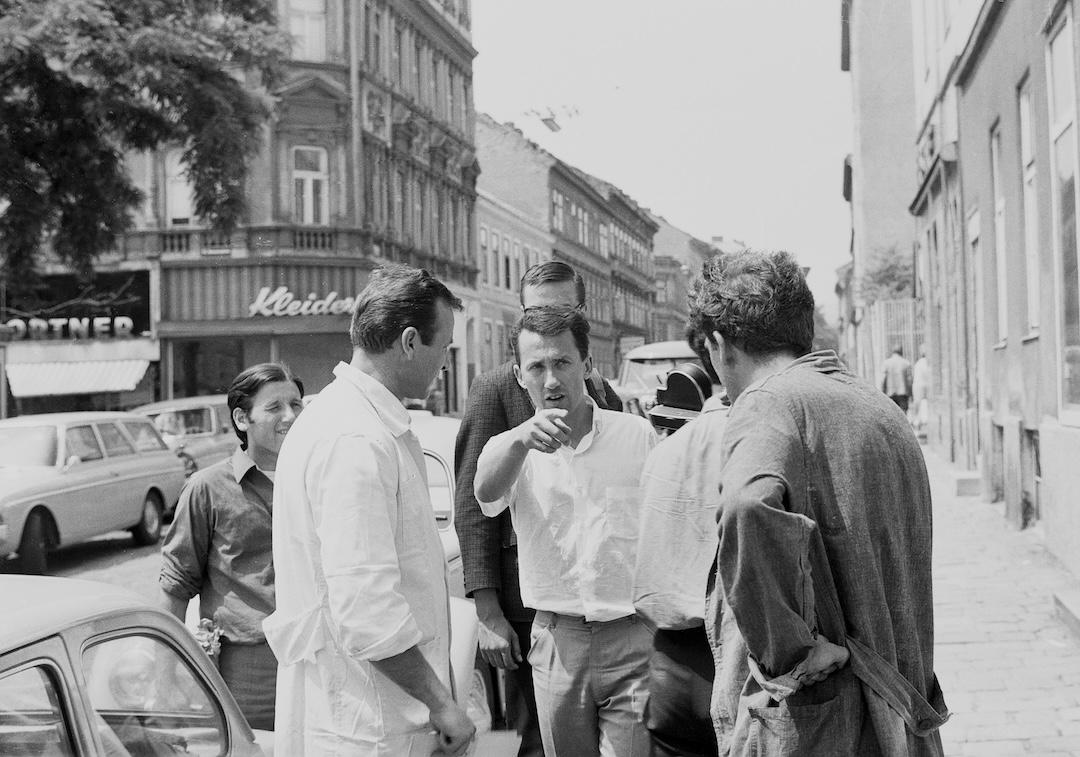
Bild/image: Dreharbeiten zu Hernals (1967)