

Rebel Yeah – Now and Then!
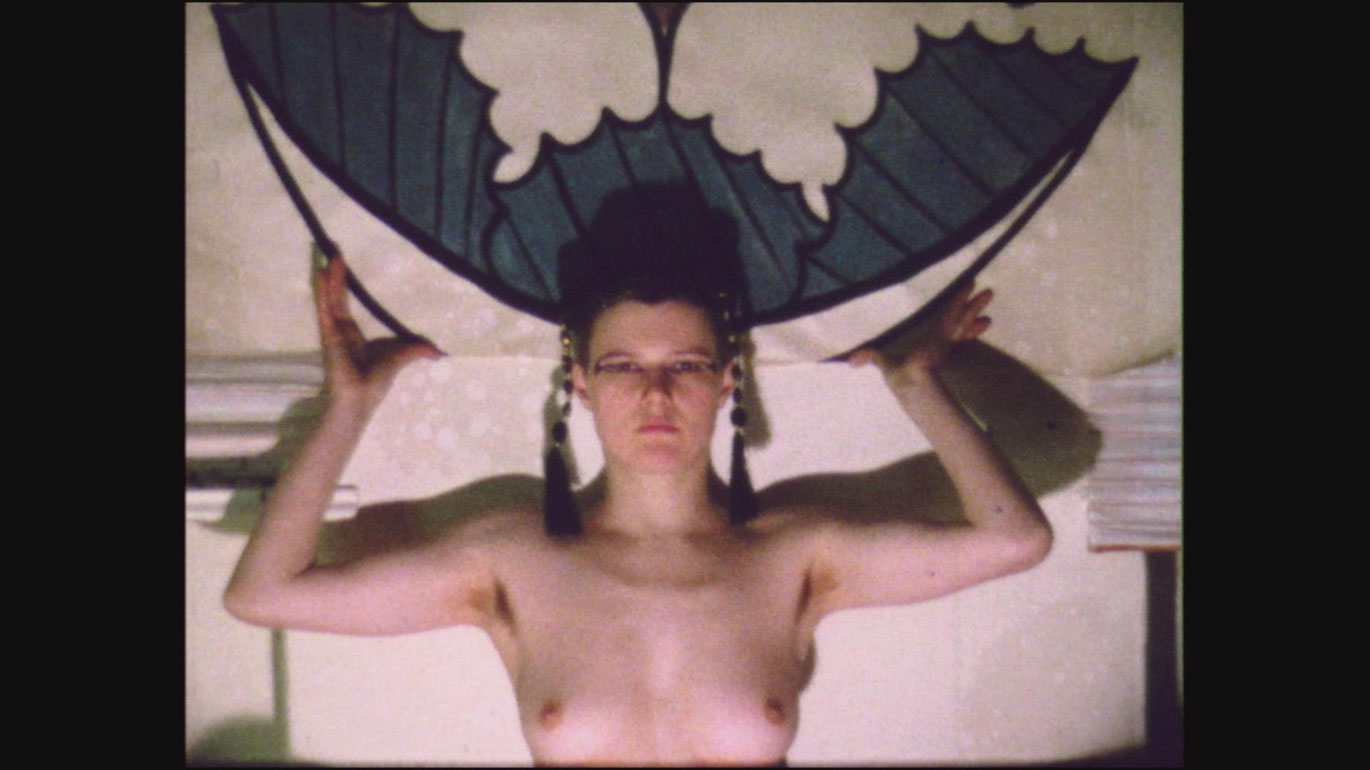
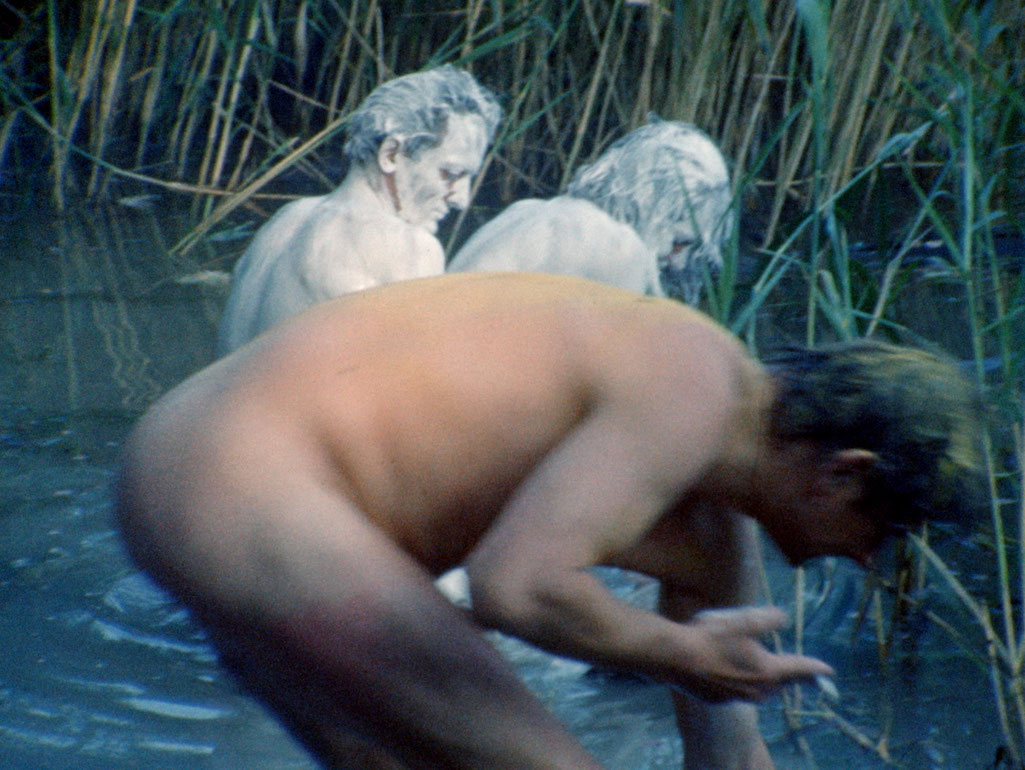
Das Happening by Ernst Schmidt jr.
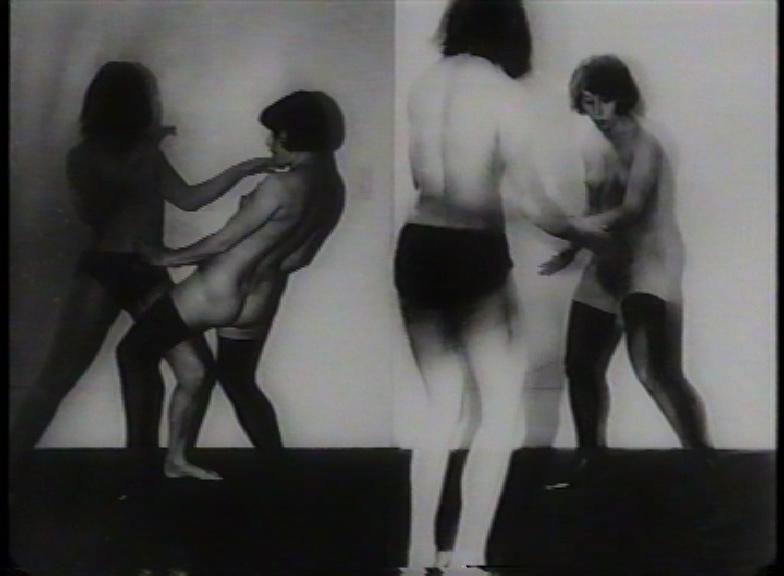
Die Geburt der Venus by Moucle Blackout
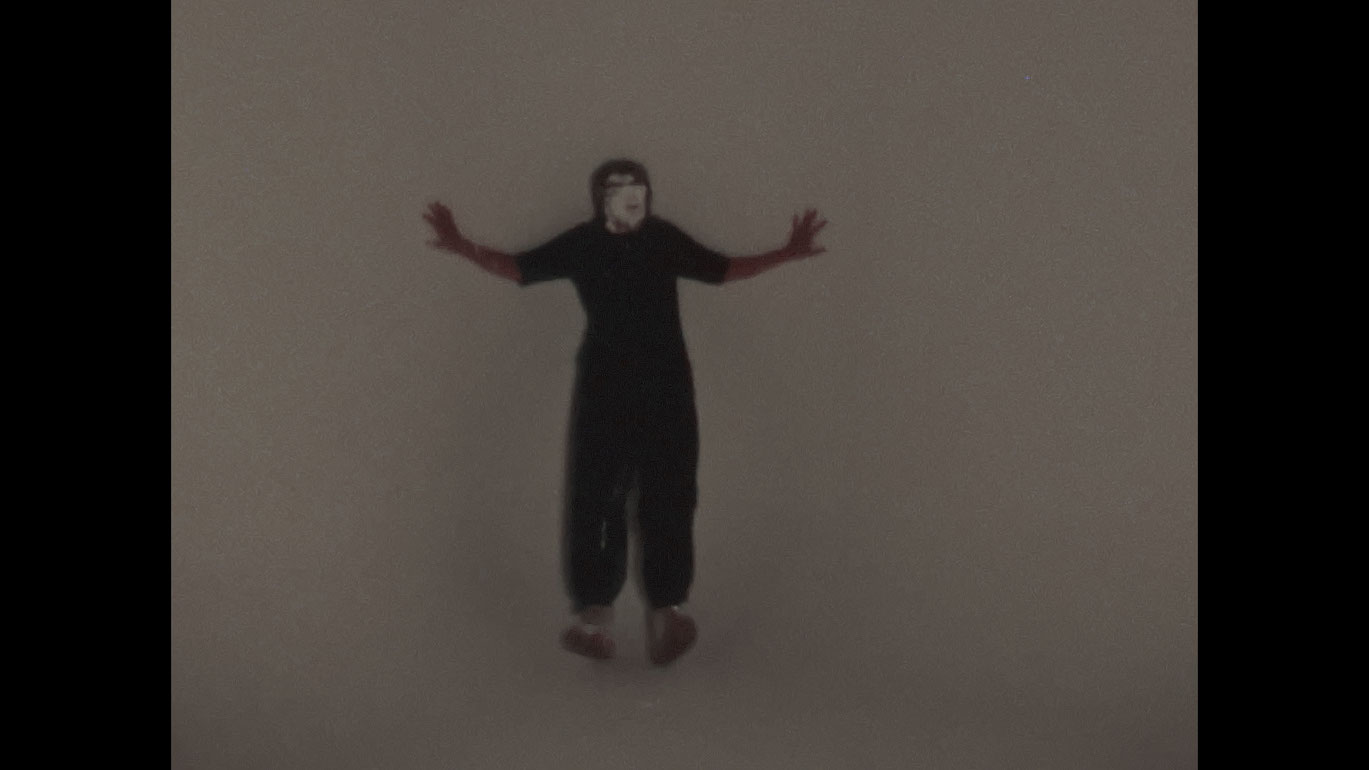
Everyone Deserves a Slice of the Pie by Sasha Pirker
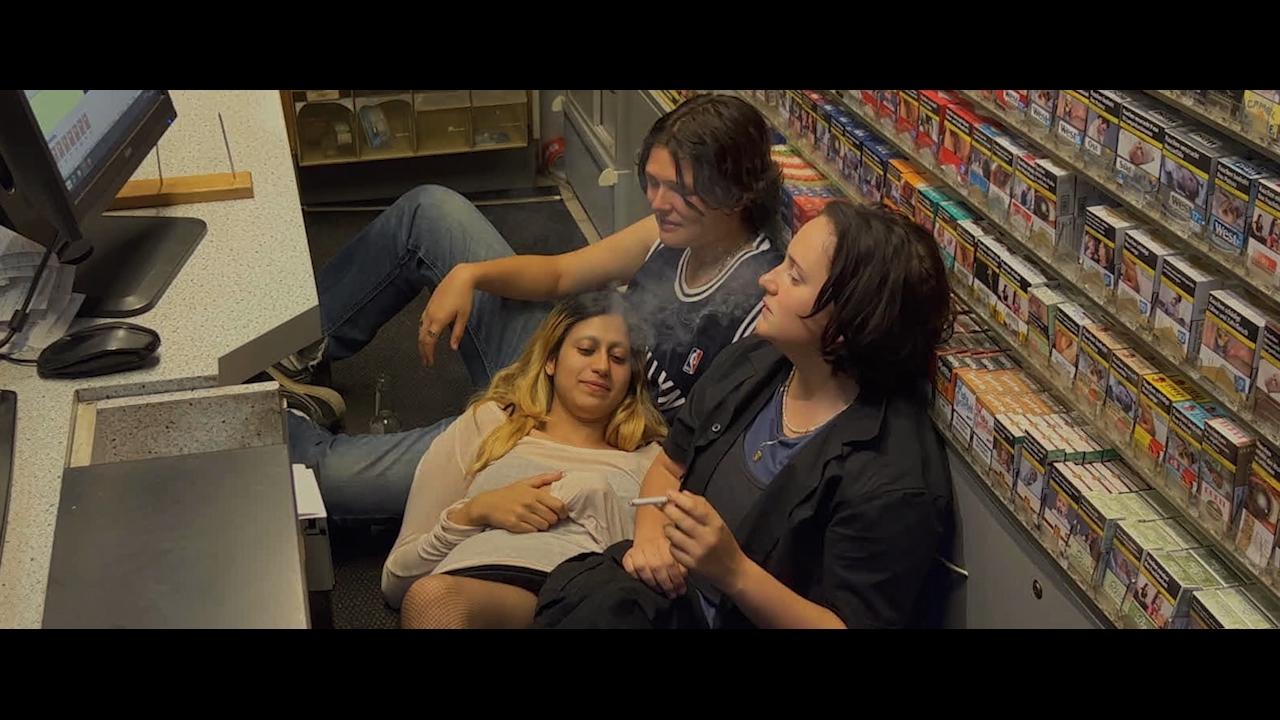
Bleifrei 95 by Emma Hütt und Tina Muffler

Schwerelos by Jannis Lenz
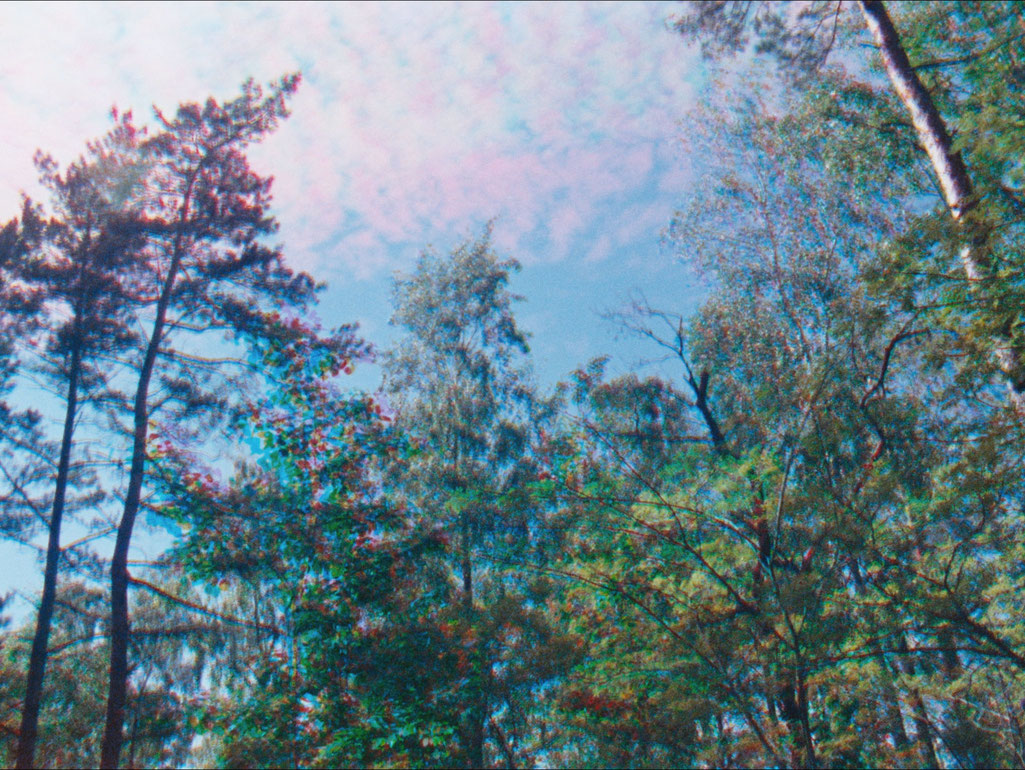
Rojo Zalia Blau by Viktoria Schmid
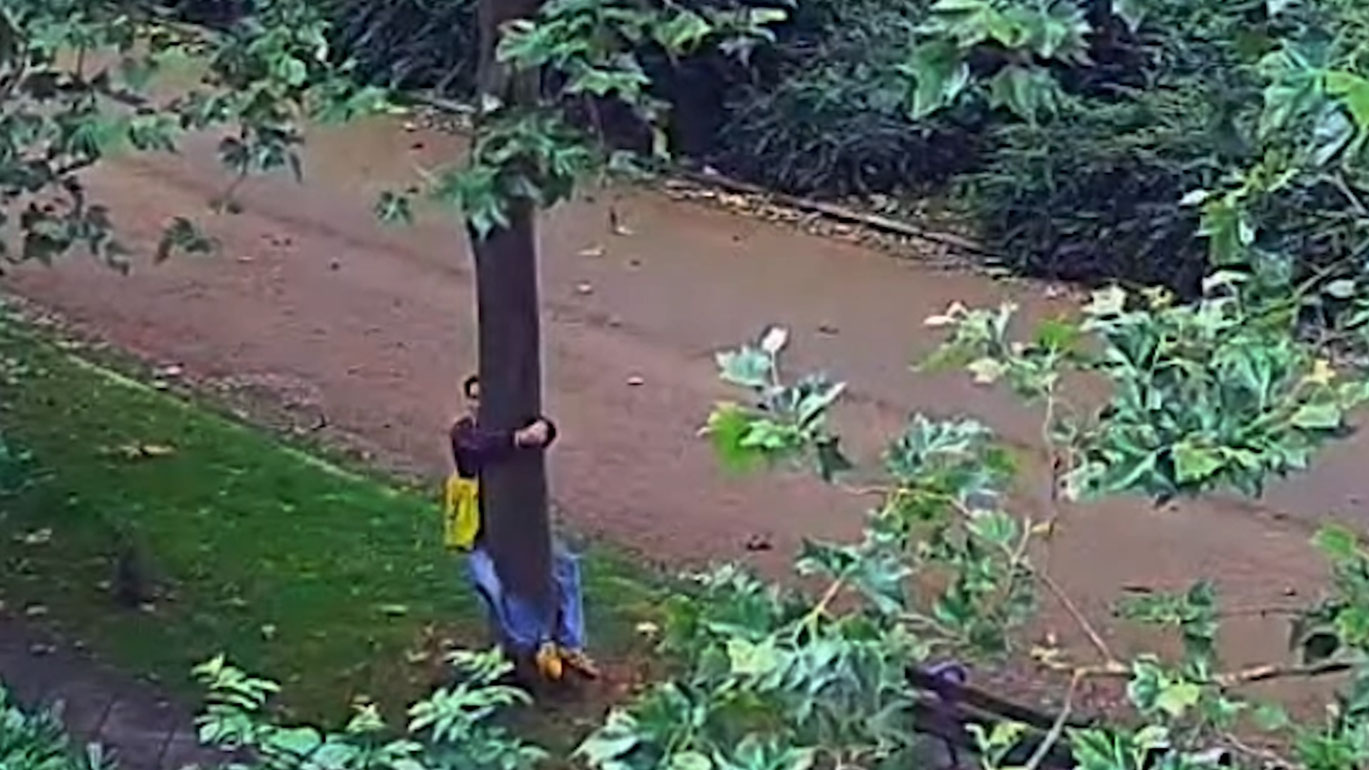
Follow Back by Rom Sheratzky
In previous editions, we have selected film initiatives or associations whose work we showcase through curated film programmes. These included evenings featuring experimental 16mm works self-developed and produced by Distruktur and Labor Berlin (2022), an evening dedicated to the pioneering work of Kino Armata in Pristina, Kosovo (2023), and a screening of feminist 16mm films from Asta Nielsen Film Archive in Frankfurt am Main (2024).
We are continuing this thread with sixpackfilm from Vienna, a distributor of artist films. Together with managing director Dietmar Schwärzler, we have curated four programmes to showcase their work as a film distributor and archive. In doing so, we are shining a spotlight on an aspect of international film and festival work that is usually behind the scenes and therefore not visible or accessible to the general public. sixpackfilm was founded in 1990 as a non-profit organisation. The primary aim of their work is to raise public awareness of Austrian artistic film and video production. This is achieved through distribution, rental, the conception and organisation of events both in Austria and abroad and their label INDEX edition. Following their festival run, all works enter the distribution catalogue, which now comprises more than 2,500 titles. The catalogue features historical classics of the Austrian avantgarde – such as VALIE EXPORT, Mara Mattuschka, Peter Weibel, Maria Lassnig, Ashley Hans Sheirl, Ursula Pürrer or Kurt Kren – alongside more recent names such as Johann Lurf, Martha Mechow, Kurdwin Ayub, Jan Soldat, Selma Doborac or Lukas Marxt.
The full programme comprises four parts, which will be presented in the presence of Dietmar Schwärzler and additional filmmakers: on 17 September, a loop of short films exploring the tension between public and private spheres, screened at Milieu Kino located in Rabet park, on 18 September, two short film programmes – one historical, focusing on the Austrian avant-garde, and one featuring contemporary works – at Luru Kino; and finally, on 19 September, also at Luru Kino, a programme of films by Viktoria Schmid in her presence.
Outside in the Cinema: Short films from the sixpackfilm archive
VALIE EXPORT: Touch Cinema, AT 1968, 2 min.
Ashley Hans Scheirl, Ursula Pürrer: A Rubber Dinghy and Oysters, AT 1985, 5 min.
Eve Heller: Astor Place, US 1997, 10 min.
Phil Solomon: CROSSROAD, US 2005, 5 min.
Jannis Lenz: Zero-G, AT 2016, 9 min.
Starting from the relocation of the cinema into public space, a programme of short films featuring works from the collection of the Viennese film distributor sixpackfilm explores the boundaries between public and private, visible and concealed. Valie Export’s TOUCH CINEMA ironically and provocatively makes “tangible” what voyeurs seek to touch through watching. In a public performance, Export straps a box – a miniature cinema auditorium, open at the front and back – to her bare breasts. Passers-by are invited to visit the cinema... In ASTOR PLACE by Eve Heller, we look through a shop window mirrored on the outside onto the square of the same name in New York City. Passers-by walk past. Unaware that they are being watched, they look into the camera before moving onsoon. An arrangement of asymmetrical gazes that gains in complexity on the big screen. Ursula Pürrer and Ashley Hans Scheierl’s A RUBBER DINGHY AND OYSTERS is queer DIY cinema: punk women on the New York subway, home-movie snippets and the sexually surreal. The programme is shown as a loop.
17 September, 5 pm
Milieu Kino am Rabet
Free admission
Structure, Bodies, Rebellion
Peter Kubelka: Arnulf Rainer, AT 1960, 7 min.
Ernst Schmidt jr.: Start, AT 1973, 11 sec.
Ernst Schmidt jr.: Hallo, AT 1964, 12 sec.
Ernst Schmidt jr.: The Little Machine, AT 1977, 38 sec.
Ernst Schmidt jr.: Happening, AT 1969-1979, 11 sec.
Kurt Kren: 10/65 Selfmutilation, AT 1965, 5 min.
Moucle Blackout: The Birth of Venus, AT 1970-1972, 5min.
Maria Lassnig: Couples, AT/US 1972, 9 min.
VALIE EXPORT: Remote…Remote…, AT 1973, 10 min.
Mara Mattuschka: Ball-Head, AT 1985, 6 min.
Linda Christanell: Rouge et Noir, AT 1993, 10 min.
Ursula Pürrer, Ashley Hans Scheirl: Sex and Crime, AT 1984, 3 min.
Ursula Pürrer, Ashley Hans Scheirl: Zig-Zag Streamlet Sneaking in Shamelessly Thighwetting, AT 1985, 4 min.
Peter Weibel: TV-Aquarium (TV-Death I), AT 1970, 2 min.
Peter Weibel: Depiction is a Crime, AT 1970, 2 min.
Peter Weibel: Timeblood (Club 2), AT 1979, 3 min.
Ursula Pürrer, Ashley Hans Scheirl: Simultaneously Naked, AT 2024, 3 min.
Legend has it that by the end of the premiere of ARNULF RAINER, not a single person was left in the auditorium. Peter Kubelka’s film is now regarded as one of the classics of structural cinema. The witty film and media miniatures by Ernst Schmidt Jr. and Peter Weibel play with the audience and call into question the very apparatus within which they take place. Working with the (naked) body is a prominent stylistic element in the visual arts of Austrian (post-war) history; the Viennese Actionists were particularly influential – Günter Brus, who uses his own body, the most lasting and interesting position within this group. With their feminist perspective on self-empowerment, VALIE EXPORT, Mara Mattuschka, Linda Christanell, Ashley Hans Scheirl and Ursula Pürrer have expanded and reinterpreted Viennese Actionism. Their frequent use of their own bodies forms the terrain on which great pleasure, but also great pain, is experienced. Moucle Blackout and Maria Lassnig explore the not always congruent interplay between women and men. All of these films explore sensory dimensions of cinema, whilst also serving as political tools to rebel against traditional values. (Dietmar Schwärzler)
In the presence of Ursula Pürrer and Dietmar Schwärzler
18 September, 6 pm
Luru Kino
€ 7,50 (€ 6,50 red.)
Found footage, cakes and sex
Sasha Pirker: Everyone Deserves a Slice of the Pie, AT 2025, 17 min., OmeU
Jan Soldat: Alfred Edel's Attack on Himself, AT/DE 2025, 15 min., OmeU
Rom Sheratzky: Follow Back, AT/DE 2025, 23 min., OmeU
Emma Hütt, Tina Muffler: Unleaded 95, DE/AT 2025, 24 min., OmeU
Sasha Pirker’s wittily choreographed short film explores the connections between the history of women in early cinema, the 100th anniversary of the 16mm format, contemporary despots such as Putin, Trump, Netanyahu or Erdogan, the Pavlova cake, and political activism. In his meticulously researched “gathered footage” piece, Jan Soldat pays homage to the actor Alfred Edel, a key figure of the New German Cinema: Soldat weaves together fragments of dialogue from a wide variety of the actor’s films and roles into a coherent narrative that distils and showcases the actor’s typology or typologies. Rom Sheratzky, meanwhile, uses a public live-stream camera in Frankfurt/Main to get closer to his love interest – an endeavour oscillating between shameless romantic bliss and a tingling sense of unease. There are no consequences – this could be the refreshing motto of Emma Hütt and Tina Muffler's fast-paced and exhilarating short feature film about friendship, love and quick sex. A queer road movie, set between a petrol station and Germany’s oldest lesbian bar (La Gata in Frankfurt/Main). (Dietmar Schwärzler)
In the presence of Emma Hütt and Dietmar Schwärzler
18 September, 8 pm
Luru Kino
€ 7,50 (€ 6,50 red.)
Light, colour, time – the films of Viktoria Schmid
Rojo Zalia Blau, AT 2025, 10 min.
NYC RGB, AT/US 2023, 7 min.
KatharinaViktoria 2(021), AT 2021, 1 min.
A Proposal to project in Scope, AT/LT 2020, 8 min.
W O W (Kodak), AT 2018, 3 min.
A Tama for Ektachrome, AT 2016, 1 min.
A Proposal to project in 4:3, AT 2016, 2 min.
IT’S A DANCE, AT 2014, 2 min.
KatharinaViktoria, AT 2011, 1 min.
ACHTUNG / HALLO 35, AT 2010, 2 min.
GOLAN, AT 2012, 2 min.
Foodfilms, AT 2010, 8 min.
Viktoria Schmid’s films operate at the intersection of experimental film, installation and media reflection. At the heart of her works lie the fundamental elements of the cinematic apparatus – camera, editing, lighting, film material and screen – which Schmid treats not merely as technical prerequisites, but as independent aesthetic factors creating meaning in their own right. Thus, her films engage with the cinematic dispositif by making visible the interplay between perception and projection, pictorial space and materiality.
Street canyons, skyscrapers and water towers: The iconography of New York’s urban landscape is well known. In NYC RGB however, Schmid shows us New York City as we have never seen it before. She has triple-exposed the analogue film stock using different colour filters – first red, then green, and finally blue – thereby fusing colours, architecture and time into a completely new form of perception. NYC RGB and ROJO ZALJA BLAU are part of a series of works in which Schmid explores early filming techniques, historical colouring processes in analogue film and 16mm footage “cut” in-camera.
In W O W (KODAK), she compiles and manipulates amateur footage of the partial demolition of Eastman Business Park in Rochester, New York. Once a global centre for analogue photography, the site’s redundant film production facilities were reduced to rubble and ashes. On the one hand, the demolition shown here is a radical expression of media shift towards the digital. At the same time, the reverse playback of the footage – one of the earliest special effects techniques in film history—articulates a longing for the continuation of analogue media.
For A PROPOSAL TO PROJECT IN SCOPE, Schmid set up a screen in Cinemascope – the widest aspect ratio, which was increasingly used in the Western genre – on a barren dune on the Lithuanian coast. The film simultaneously portrays the landscape while documenting the intervention in the natural environment. Schmidt filmed this site-specific installation at various times of the day, turning the screen into a projection surface for the shadows of the surrounding trees and bushes. A cinema without film.
In the presence of Viktoria Schmid and Dietmar Schwärzler
19 September, 8 pm
Luru Kino
€ 7,50 (€ 6,50 red.)
Rebel Yeah – Now and Then!
sixpackfilm aus Wien
im Rahmen des GEGENkino-Festivals in Leipzig
Im Milieu Kino ist der Eintritt frei
Im Luru Kino kostet das Ticket
€ 7,50 bzw. ermäßigt € 6,50